Did 1917 deserve to win best picture?
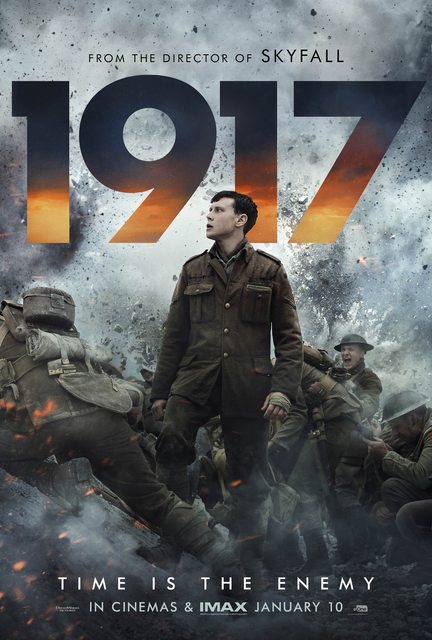
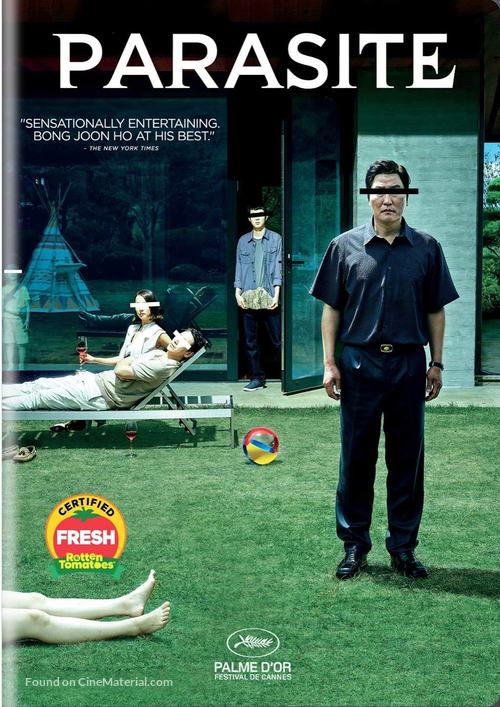
Congratulations to Bong Joon Ho and Sam Mendes for their amazing accomplishments in film making. 2019 was one of the best years for film, but there was one clear winner at this year’s Oscars, and that is Parasite.
I’ve read a lot of tweets and articles that argue 1917 was snubbed at the Oscars (didn’t know that winning 3 Oscars was ‘snubbing, but okay.) So, because of this, I wanted to compare and contrast both winners, offering commentary on this feud, and I want to break down exactly why 1917 lost to Parasite. (I’ve seen a few people argue that Joker was robbed, but let’s be honest, that film was nothing without Joaquin Phoenix.)
1917, The Good
When 1917 ended I leaned over to my wife and said, “Hey, that was pretty good,” and it was. 1917 is a good film. Roger Deakins’ cinematography was impressive; the “one-shot” take was marvelous and it made the film feel more real. This is what film making is all about: the audience needs to feel connected to the character, the story, and their motivation. The audience needs to feel that this is all going to be worth it in the end, especially when watching a war movie.
Both George MacKay and Dean-Charles Chapman play their role with a convincing tenacity, and the scenery was admirable. It felt so real, and I was excited to watch the film unfold in such a realistic environment.
1917, Why It Didn’t Win
I’ve never made a film. I never went to film school, but here is my take.
This movie confuses the audience, and we don’t know who to root for or why we are watching. We have a moral choice right from the beginning between the two leads — who are we supposed to root for? Are we supposed to root for the brother because he wants to save his brother? Or should we root for the guy who hates war? Who is the hero? Is there no hero? A part of me felt like I was the hero having to sit through the drudgery of two characters I don’t care about.
Next, war is bad. We get it. You don’t have to take a camera and make the audience run along two soldiers to show us that war is horrific. We know that animals were killed in war; we know that there are charred and dead bodies across a battlefield. While beautiful, the “one-shot” technique served no purpose for the film. It was not showing us something new; it wasn’t reinforcing a lesser-known idea. We know that war is horrific.
By having a real war as background for the film, Mendes limits motivation and moral ambiguity for the characters. That’s why he had to create motivation for the two actors by giving a haphazard back story that we are supposed to follow. No one wants to sit alongside others in war, so what’s the purpose? This isn’t new. Saving Private Ryan did this 11 years ago. What is 1917 trying to teach us that we don’t already know?
1917 failed to deliver on multiple accounts. Parasite was the clear winner.
If you want to read how I feel about Parasite, please go back to my first article Setting the Tone.
 filmsandrants.movie.blog